The Blog

14 Best Travel Bags on Amazon I Actually Use
Last Updated on September 21, 2026 by Sierra Richard
This post contains affiliate links. If you buy something through one of my links, I may earn a small commission at no extra cost to you. I only link to things I actually use. These links are marked with “*”.
I was also gifted several of the products in this post. Everything here was gifted except the holographic fanny pack, the kensie luggage set, the jewelry case, and the Peak Design bags. Those four I bought with my own money. Gifted or not, nothing gets a spot on this list unless it has survived real trips with me.
The best travel bags on Amazon, tested on real trips: luggage, packing cubes, toiletry bags, dry bags, fanny packs, and the camera bags we fly with.
My bags live in a pile on my office floor between trips, and that pile has gotten a little out of hand.
I live about four or five hours from family, so I try to make that drive once a month. If I am not going there, I am usually going somewhere else. Some months it is multiple weekends back to back.
The best travel bags on Amazon* are the ones that solve one specific problem instead of trying to do everything at once. My kensie hardside set* has gone coast to coast for over five years, compression packing cubes shrink a puffy coat down to nothing, and a hanging toiletry bag means I can get ready in a shared bathroom without taking over the counter.
So here is the whole pile, sorted by what each bag actually does. Luggage, cubes, toiletries, wet and dry bags, fanny packs, first aid, camp cooking, and the camera gear bags that come with us on hikes.
The Luggage Set I Have Used for Five Years
The kensie Alma hardside spinner set in Japanese Carmine Red is the only luggage set I own, and it has three sizes that nest inside each other for storage. I have had it for over five years. It has gone coast to coast and everywhere in between, and the only real damage is scuffs on the shell.
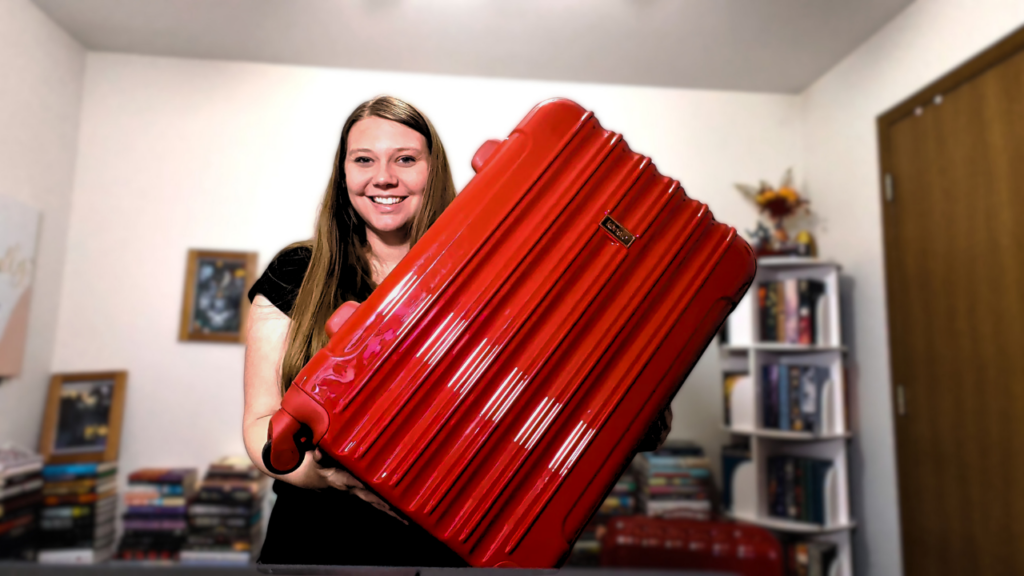
Here is how I use each size:
- 20 inch carry-on. Overhead bin trips. The hard shell matters here because bags get thrown around on bumpy flights.
- 24 inch medium. My long weekend bag, good for three or four days. I need it because visiting family means hiking boots, river shoes, and casual shoes all in one trip.
- 28 inch large. Seven plus day trips. This is the one that went to Yellowstone National Park with us, where laundry access was questionable.
Best feature: the rubber handles move instead of staying static, and there are two of them on the top and side, which makes lifting a bag into the overhead bin much easier.
Why Hardside and Four Wheels Matter
Four rotating spinner wheels and a hardside shell are the two features I would not give up on checked luggage. Spinner wheels let you push the bag upright beside you through an airport instead of dragging it behind you on two wheels.
The push-button handle pulls all the way up to a comfortable height for me, and I am about five foot seven.
The set also has an expander zipper, which is the second row of zippers that adds a few inches of depth. If you overpack like I do, that expander is the difference between closing the bag and sitting on it.
Both zipper rows are lockable, and there is a built-in lock if you would rather use that. The U.S. Department of Transportation tracks how often checked bags get lost or damaged in its monthly Air Travel Consumer Report, which is a good reminder to keep anything irreplaceable in your carry-on.
Are Compression Packing Cubes Worth It for a Weekend Trip?
Yes, and they are the single biggest upgrade I have made to how I pack. I used to roll everything and shove it in my suitcase. Things unrolled, everything came out wrinkly, and I could never find anything.
Compression packing cubes are fabric pouches with two zippers. The first zipper closes the cube. The second one squeezes the air out and flattens what is inside.
I own two different sets and use both, sometimes on the same trip. My husband and I used nearly every cube we own on our last trip.
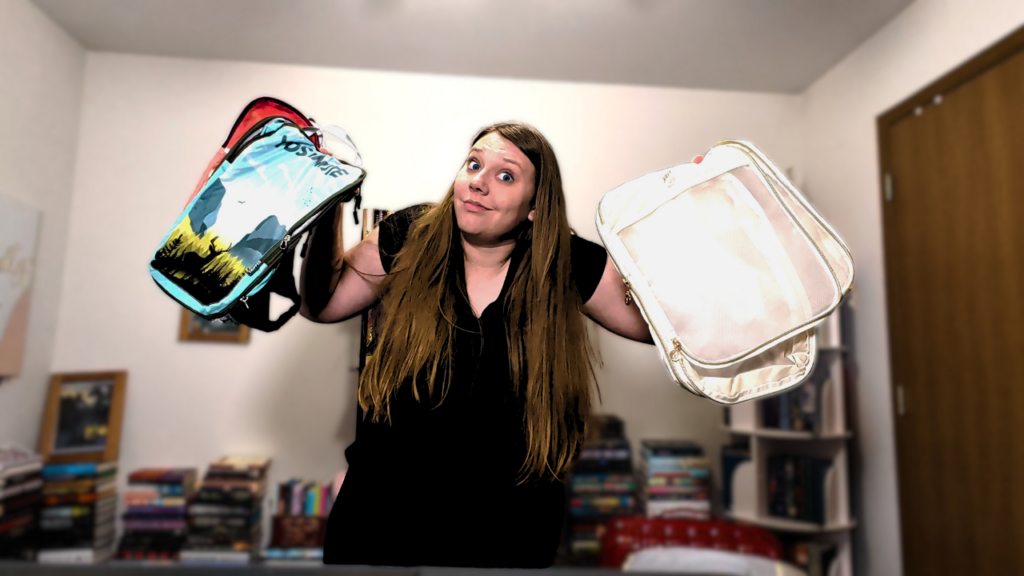
Two ways I organize them:
- One cube per outfit. Best for short trips. Grab a cube, get dressed, done.
- One cube per category. Small cube for underwear and socks, medium for pajamas, large for jeans and sweatshirts.
Puffy coats are what sold me. They compress down to almost nothing.
Clear-Front Compression Cubes
These have a see-through front panel*, so you can identify what is inside without opening the cube. That is the whole reason I keep them in rotation.
The set comes in multiple sizes with sturdy handles on each cube, which makes them easy to grab and move between bags. Some of the pieces in the set are standard cubes rather than compression ones, and those are what I use for shoes and items that do not need squishing.
They are plain and functional and they work.
National Park Compression Cubes
These cubes are each named for a different national park*, which turns packing into something my brain actually enjoys. Grand Canyon, Yellowstone, Sequoia, Tetons, Yosemite, and Arches.
I am a huge national park person, so this is peak nostalgia bait for me and it works. It is also genuinely useful. “I put my socks in the Grand Canyon” is a sentence I can remember. A generic gray cube is not.
The Tetons bag is my dirty laundry bag. It folds up and snaps closed. Sequoia is the small one for socks, underwear, and swimsuits. Grand Canyon and Yellowstone are mid-size for shorts and t-shirts. Yosemite and Arches are the big ones.
If you travel with kids, this is the move. Assign each kid a park and tell them to go grab Yellowstone when it is time to get dressed.
Which Packing Cube Set Should You Buy?
| Features | Clear-Front Set* | National Park Set* |
|---|---|---|
| Visibility | Fully see-through front panel | Partly see-through on lighter colors |
| Compression | Yes, dual-zipper on compression pieces | Yes, dual-zipper on all cubes |
| Extra pieces | Includes non-compression bags for shoes | Includes a fold-and-snap laundry bag |
| Zipper pulls | Standard | Ridged pulls, easier to grip |
| Best for | Seeing everything at a glance | Families, kids, national park people |
Honestly? Either one. Both are good quality and both do the job. Pick based on whether you want maximum visibility or a system your family will remember.
The Hanging Toiletry Bag That Changed How I Get Ready
The BAGSMART large toiletry bag* hangs from a hook or towel bar and unfolds into four panels, which means I never set anything on a hotel counter. I have had mine for over five years with zero issues.
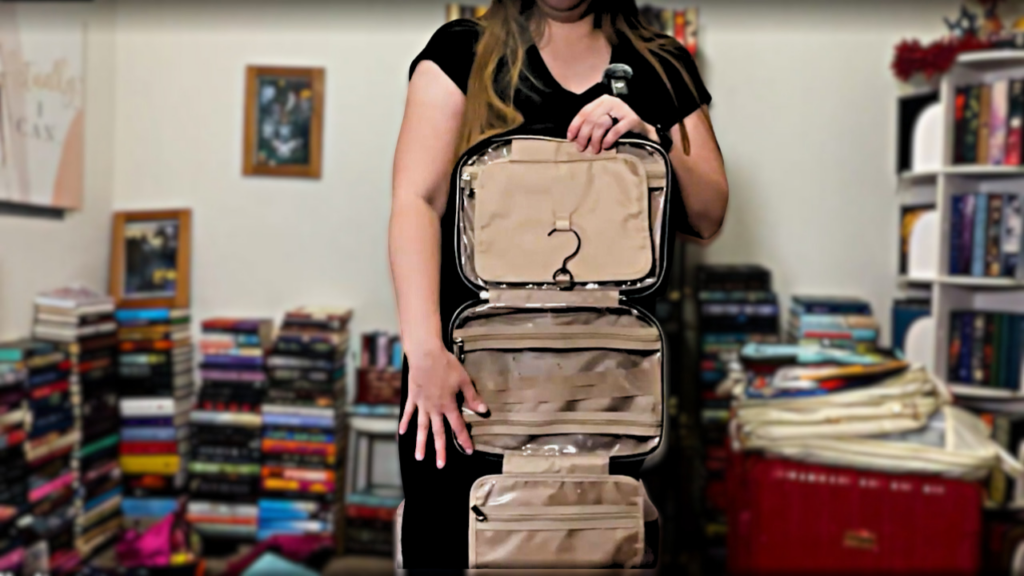
The hook is the whole point. It attaches to a bar in the bathroom, and there is a dedicated spot to tuck it away when you fold the bag back up so it does not snag on anything.
Here is how I load the four panels:
- Panel one: oral care. Toothbrush, travel toothpaste, mouth guard, floss.
- Small pouch: jewelry and makeup, when I am not bringing much of either.
- Middle panel: shower stuff. Full size shampoo and conditioner when I am taking a bigger bag.
- Fourth panel: skincare, with dual zippers so you can get in from the top or the bottom.
Several panels are clear, and there are elastic straps inside for anything you do not want rolling around.
Why the Hanging Design Beats a Zip Pouch
A hanging toiletry bag pays for itself the first time you share a bathroom. I went on a bachelorette trip where four of us were sharing one shower. I brought this in, hung it up, got ready, folded it up, and took it back out with me.
Nobody had to work around my pile of stuff on the counter. That is the entire pitch.
The front exterior pocket is the one weak spot. It does not snap or close well, and a mirror fell out of mine. I would not put anything breakable in there.
One packing note: if this bag is going in your carry-on, the TSA’s 3-1-1 rule limits liquids, gels, and aerosols to containers of 3.4 ounces or less in one quart-size bag. Full-size shampoo only works if you are checking a bag.
The Lay-Flat Makeup Bag for Full Glam Trips
The Lay-n-Go Cosmo* is a drawstring bag that opens completely flat, so every product is visible on the counter at once. This is my wedding and conference bag.

I love my toiletry bag, but there are trips where I need more than it holds. If I am doing full glam with foundation, eyeshadow, lipstick, and mascara, everything goes in this instead.
How it works: you dump everything in, pull the drawstring, and wrap the extra cord around a few times so it is out of the way. At the counter, you loosen it and the whole thing lays flat.
There is a zipper pocket inside plus expanders, which is where I put brushes so they are not rolling around loose.
It has a water-resistant feel but I would not call it fully waterproof. And it is small, so it is a makeup bag, not a full toiletry replacement.
The Travel Jewelry Case That Keeps Necklaces From Tangling
A hard-shell travel jewelry case* keeps necklaces from turning into one knot at the bottom of your bag. This one is small enough to tuck inside another bag, which is exactly what I want.
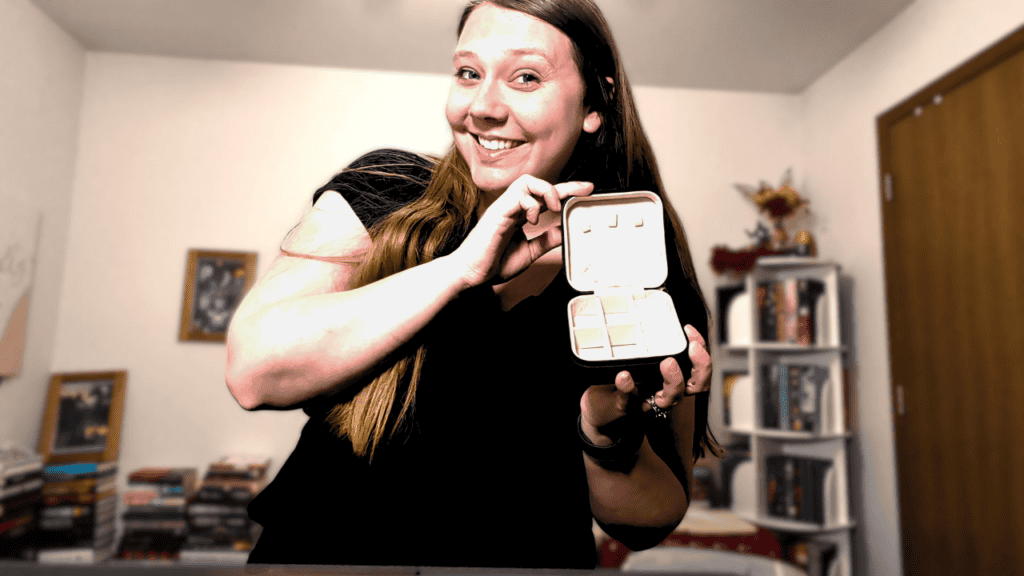
For most trips I am only bringing my wedding ring. Nobody needs a jewelry collection for a hiking trip.
But conferences, weddings, and nice dinners are different. If I am packing for multiple events, I want options, and I want them to arrive untangled.
Inside there are ring slots, holders for whatever you want to bring, hooks for necklaces or bracelets, and a small pouch to hold them in place.
The necklace hooks are the reason I bought it. Bring more than one necklace in a regular pouch and you will spend twenty minutes untangling them in a hotel room. Ask me how I know.
Wet Bags vs Dry Bags: What Is the Difference?
A wet bag keeps wet things in. A dry bag keeps water out. They sound like the same product and they do opposite jobs, which is why I travel with both.
If you are doing anything involving water, you probably need one of each.
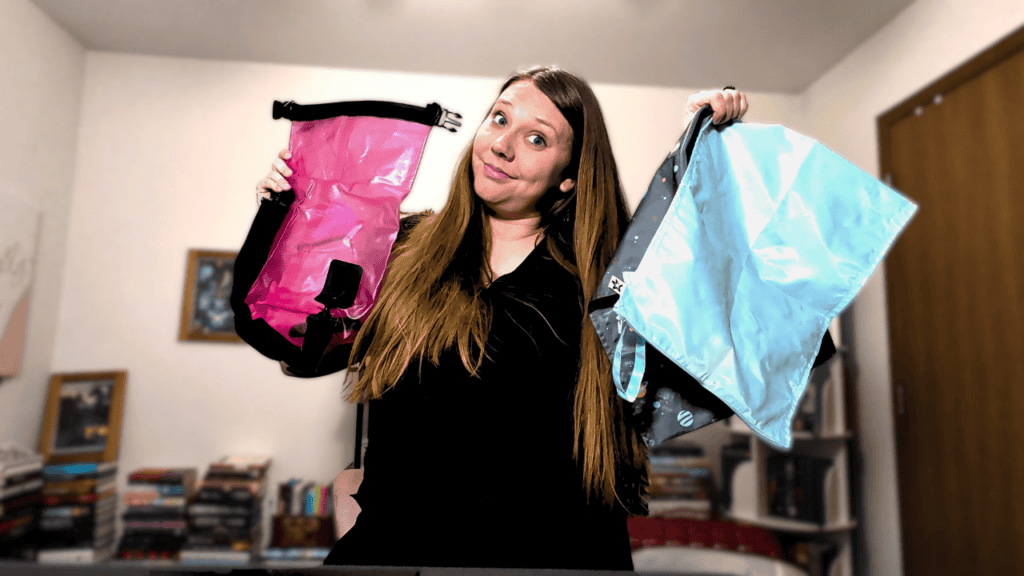
Wet Bags for Swimsuits and Everything Else
A wet bag* is a waterproof-lined zip pouch designed to hold soaking items without soaking everything around them. Mine are from Tiny Twinkle* and come in a two-pack.
They are marketed for babies and diaper bags, and they work great for that. They also work great for adults, so do not skip them because of the packaging.
My number one use is swimsuits. If we have been swimming and we are packing up to drive somewhere else, that wet suit is not going in my suitcase. It goes in the wet bag, zipped and sealed.
They also handle soiled burp rags and wet cleanup rags. Each bag has a snap on the side, so you can clip it to a stroller, a canopy, or a spot in your car, plus small handles.
The Dry Bag I Take Kayaking
A dry bag* is a roll-top waterproof bag that keeps your belongings dry while you are surrounded by water. I have used this HEETAU* one kayaking several times.
You put your dry things inside, roll the top down several times, and clip it closed. There are printed instructions right on the bag if you have never done a roll-top before.
There are clip points on the top and a handle on the side, so I can carabiner it straight into my kayak. It also comes with adjustable straps that snap on, and you can position them to wear it as a sling bag instead.
It comes with a separate phone case, which can be very helpful if you want to be able to call for help on the water, but want to keep your phone as dry as possible on your trip.
The Two Fanny Packs I Own (Yes, Two)
I used to think fanny packs were strictly an 80s thing that people made fun of, and now I own several. I have zero shame about it.
I keep two in rotation because they solve different problems. One is my everyday travel bag. One is for days when I know I am going to get wet.
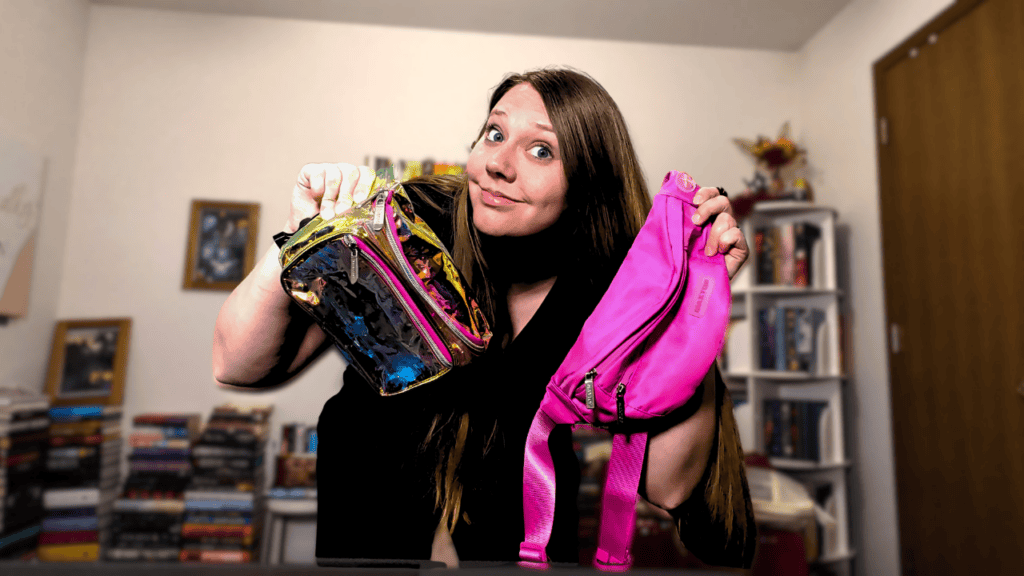
The Everyday Sling-Style Fanny Pack
The MAXTOP belt bag* has four zippered pockets and a headphone port, and I wear it as a sling across my shoulder more often than around my waist. This is my airport bag.
Zipper layout: one on the back panel, one on the main pouch, one inside the main pouch, and one on the front pouch.
That headphone hole has a second life. Run a charging cable through it, keep your power bank in the outer pocket, and charge your phone while you walk.
At the airport I keep my phone, my lip balm, and my wallet in here so everything stays on my body. It also slides into a carry-on when I need it out of the way for boarding.
The strap adjusts, and there is a plastic keeper that holds the excess strap flat instead of letting it dangle.
The Waterproof Holographic Fanny Pack
This SoJourner holographic fanny pack* is waterproof, and I bought it for Disney World in December 2021 specifically because of the water rides. It has been with me for years since.
Three pouches: a back pouch, a very large middle pouch, and a large front pouch. It holds more than it looks like it should.
The strap adjusts the same way, with a rubber strap instead of a plastic keeper for the excess.
I wore this as a true fanny pack at Disney rather than as a sling. It held everything I needed for a full park day without being bulky.
If you are headed to a theme park with water rides, get the waterproof one. The clear pink and gold design is also just fun, and I refuse to apologize for that.
Fanny Pack Comparison
| MAXTOP Belt Bag* | SoJourner Holographic* | |
|---|---|---|
| Waterproof | No | Yes |
| Pockets | 4 zippered | 3 pouches |
| Headphone port | Yes | No |
| How I wear it | Sling across shoulder | Traditional waist |
| Best for | Airports, everyday travel | Theme parks, water days, beach |
The Travel First Aid Kit That Fits in a Packing Cube
The KeepGoing travel first aid kit* has 130 pieces, is TSA-approved for carry-on size, and takes up less room than most kits half as stocked. I cannot be prepared for everything. I have made peace with that. But being prepared for the small stuff costs almost nothing in luggage space.
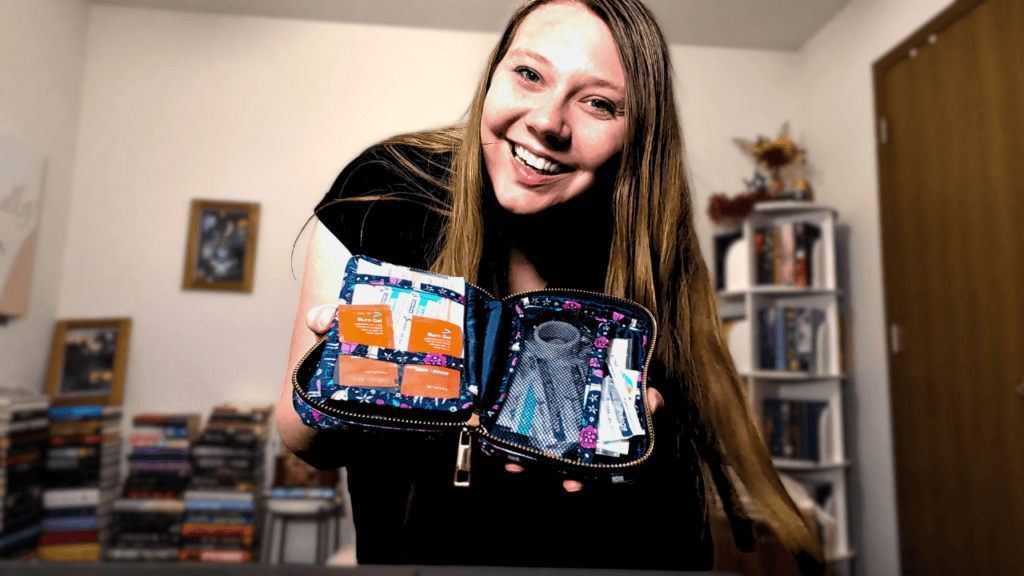
What is inside, in an unzip-and-it-is-all-visible layout: a tick remover, safety pins, cotton tips, a sewing kit, steri-strips, tweezers, small scissors, and a lot of bandages in shapes for knuckles and fingertips.
There is also triple antibiotic ointment, hydrocortisone cream, burn gel, sting relief pads, alcohol prep pads, non-sting cleaning wipes, lip balm, nonstick gauze pads, nosebleed plugs, tape, a temperature strip, moleskin, and stickers for kids.
It comes with a first aid guide explaining what to do in different scenarios, which matters if you are not the person in your group who does this for a living.
Why a Compact Kit Beats a Big One
The best travel first aid kit* is the one you actually bring, which means size wins over completeness. The CDC’s Yellow Book recommends every traveler carry a personal kit sized to their trip and health history, stored in a durable, water-resistant container.
This kit will not handle a real emergency. Nothing this size will. That is not what it is for.
It is for the blister on mile four, the bee sting at the picnic table, and the kid who scraped a knee on the trail. Those are the things that actually end a day early or leave someone miserable until they can get additional help.
The exterior strap comes off if you want it to, and the bag itself is genuinely cute, which doesn’t make it more functional, but does make it more fun.
The Camp Cooking Utensil Set for People Who Always Forget Something
This portable camp kitchen set* holds every cooking utensil in one hanging organizer bag, so camp cooking becomes grab-and-go instead of a memory test. The number of times we have gotten to a campsite and been missing one critical thing is embarrassingly high.
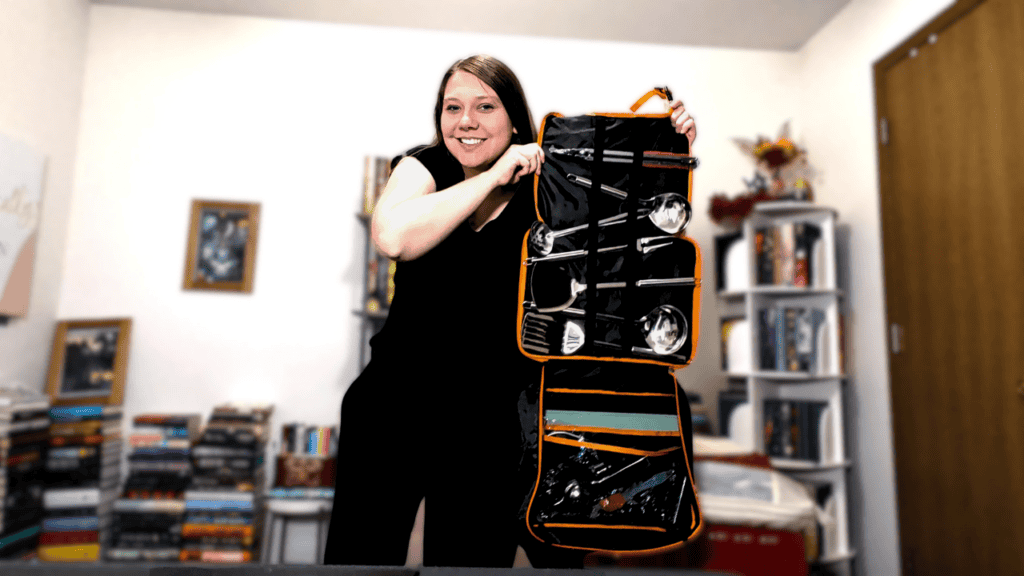
The bag unrolls flat, which works best on a picnic table, and clips so you can hang it from a pole or a tree limb. There is also an interior strap for hanging.
Inside: tongs, a spoon, a slotted spoon, a ladle, spatulas, a cutting board, a juicer, knives, a bottle opener, kitchen shears, and a cheese grater. There is extra room to add your own things.
The real value is not the utensils. It is not having to remember them. I have shoved a spatula in the side of a cooler before. It falls out in the back of the vehicle and gets forgotten until it’s time to flip the eggs and the spatula is no where to be found.
The Peak Design Camera Bags We Fly With
Peak Design makes the two camera bags we own, and we bought both with our own money because camera lenses are expensive enough to justify it. My husband does wildlife photography, so this gear travels with us constantly.
The two bags do genuinely different jobs for us. One goes on the plane. One goes on the hike.
Peak Design Everyday Sling
The Everyday Sling* is for one camera and one or two lenses, and it is great for a small vlogging camera. It wears as a sling or a fanny pack depending on how you clip the strap.
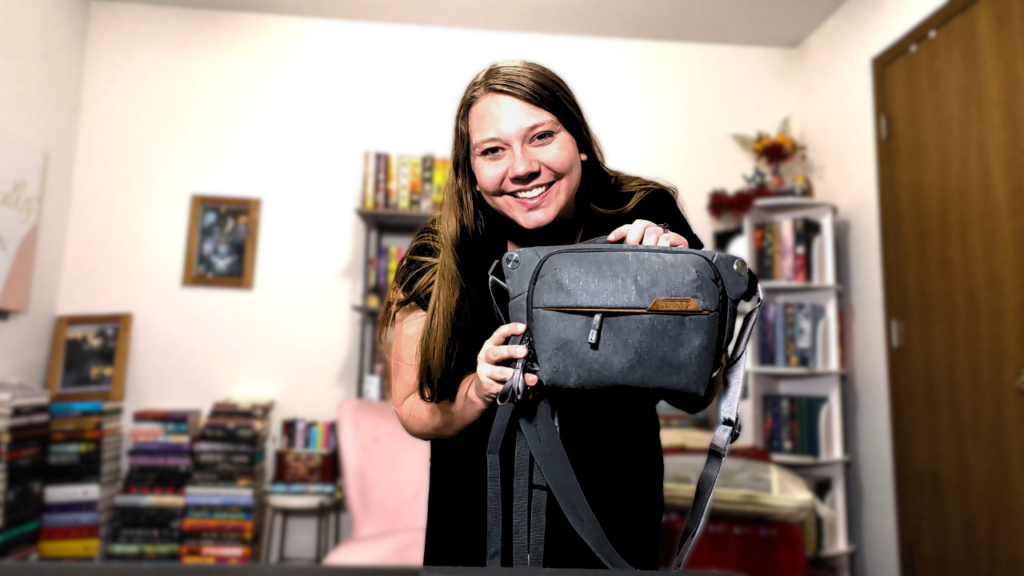
The strap has real cushion and clips on and off easily. There are attachment points everywhere for carabiners, lens accessories, and anything else you want to hang off it.
Pockets: a front pocket that fits lens cleaners, a larger main pouch with a soft protective interior, and an additional spot that is perfect for straps and spare lens covers.
It is padded all the way around, which protects the lenses and makes it comfortable to wear for a long day.
Peak Design Everyday Backpack 30L
The Everyday Backpack 30L is a beast, and it is worth every penny if you are protecting expensive lenses. This is the airplane bag.
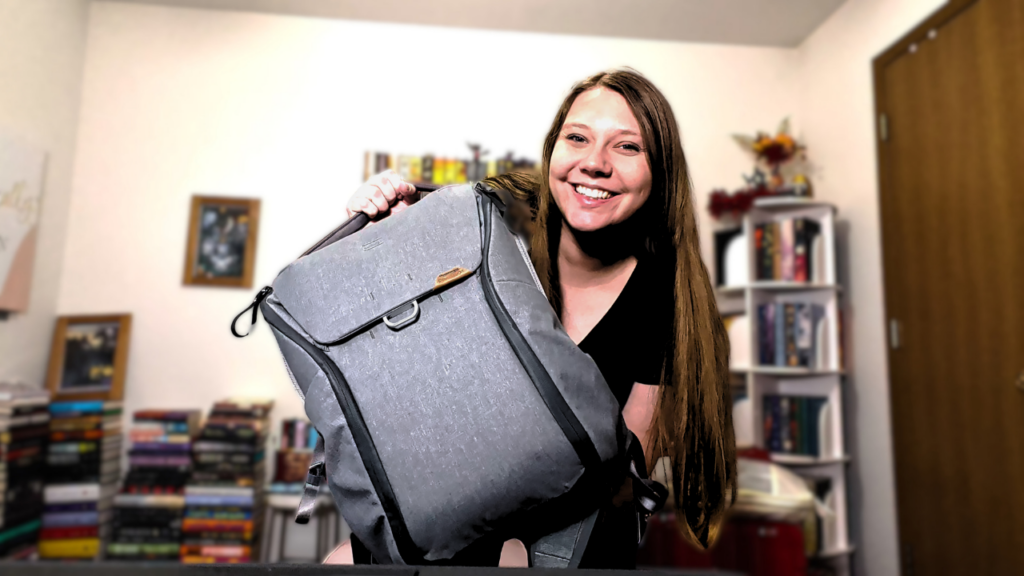
The straps clip to the bag magnetically when you are not wearing it, so they are not dangling and catching on things. There are camera attachment points built into the straps themselves.
The main compartment has four slots up top and opens from both sides via flaps, so you can grab a lens without unzipping the whole bag and digging. Every camera bag we owned before this one made you go in from the top or lay the whole thing flat.
The FlexFold dividers are Velcro on both sides, so you build the interior around your specific lenses. There is a padded laptop sleeve that fits a 15 or 16 inch laptop and a very hard bottom panel.
Sling or Backpack: Which One?
| Everyday Sling* | Everyday Backpack 30L* | |
|---|---|---|
| Capacity | 1 camera, 1 to 2 lenses | Multiple lenses and bulky gear |
| Laptop | No | Yes, 15 to 16 inch sleeve |
| Access | Single main pouch | Dual side access, MagLatch top |
| Dividers | Fixed soft interior | Customizable FlexFold |
| We use it for | Hikes, day trips, vlogging | Flights and long travel days |
Simple rule in our house: the backpack goes on the plane, the sling goes on the trail with whichever lens is getting used that day.
FAQs: Travel Bags and Packing
Do compression packing cubes actually save space in a suitcase?
Yes, especially for bulky items. Compression cubes have a second zipper that pushes the air out after you fill them, so puffy coats and sweatshirts flatten dramatically. Thin items like t-shirts compress less. The bigger win for most people is organization, since you stop digging through a suitcase to find socks.
What is the difference between a wet bag and a dry bag?
A wet bag keeps moisture in, protecting the rest of your luggage from a soaked swimsuit. A dry bag keeps moisture out, protecting your phone and clothes while you kayak or paddleboard. They are opposites. If you swim and do water sports on the same trip, you want both.
Can I bring a first aid kit in my carry-on?
Yes, most travel first aid kits are carry-on friendly, but check the sharp items. Small scissors under four inches from the pivot are generally allowed by the TSA, and tweezers are fine. Any liquid or gel components like burn gel still fall under the 3.4 ounce limit.
Is a hanging toiletry bag worth it over a regular zip pouch?
If you ever share a bathroom, yes. A hanging bag opens into panels on a hook or towel bar, so your products stay off the counter and stay organized by category. It also folds up in seconds when someone else needs the room, which a spilled-open zip pouch does not.
How many bags do I actually need for a weekend trip?
I usually pack four. A carry-on or weekender, a set of packing cubes, a toiletry bag, and something small to keep your phone and wallet on your body. Everything else on this list is trip-specific. Add a dry bag for water, a first aid kit for hiking, or a camera bag if you shoot.
Pick the Bags That Match Your Actual Trips
You do not need every bag on this list. You need the two or three that match how you travel, and then you need to actually use them until you know their quirks.
For me that is the kensie set, compression cubes, and the hanging toiletry bag. Everything else comes out when a specific trip calls for it.
If you want the whole collection in one place, I keep it updated as an Amazon idea list so you can see everything together instead of hunting down individual links.
Be the first to comment